

Designing a home bar in a period home: light, character, and the windows that make the room
A good home bar is about more than the bottles. The cart, the glassware, the ritual of making a drink — all of it lands better in a room that has been thought about. And in a period home, the room is already doing half the work before you have poured anything.

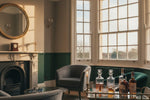
A bar cart set in a sash bay: the light does the styling for you.
The home bar has quietly graduated from a corner cabinet to a genuine design feature: a brass cart in the living room, a built-in backbar in the dining room, a cart wheeled out the moment friends arrive. But the most memorable drinking spaces are rarely the ones with the most kit — they are the ones with atmosphere. In an older house, that atmosphere is largely built in already: high ceilings, cornicing, a fireplace, and, above all, tall windows that pour light into the room. The real skill is designing the bar to make the most of what the house is handing you, rather than fighting it.
Natural light is the single biggest thing a period room gives a home bar, and it is worth designing around before you think about a single bottle. A bar is, visually, all about reflection and transparency — cut crystal, a row of amber and green glass, a polished shaker, ice catching the light in a coupe. Set that in front of a tall sash window and the whole arrangement comes alive in a way no downlight can fake. Victorian and Georgian front rooms in particular tend to have generous, near-full-height sashes, in part because the people who built them prized daylight; a home bar is one of the best possible ways to use it.
The timing is a happy accident, too. Cocktail hour and golden hour are more or less the same thing for half the year: late-afternoon and early-evening sun comes in low and warm through a west-facing sash, throwing long light across the glassware just as you are reaching for the gin. Position the bar so the light rakes across it rather than behind it, and every pour looks like a photograph.
Orientation is worth a moment’s thought when you decide where the bar goes. A west- or south-facing room hands you that warm evening light just as guests arrive; a north-facing room is cooler and more even, which flatters a crisp, bright bar of clear glass and chrome rather than warm brass and amber. Either can be beautiful — the point is to read the light your room actually gets and lean into it, rather than exiling the bar to the one dark corner and lighting it artificially.

Cut crystal and an amber spirit in low sun through a sash window — the reason light comes first.
A home bar wants a setting, and a period home hands you one for free. The bay window is the obvious gift — a shallow curved or square bay is the natural home for a bar cart or a small round drinks table, tucked out of the main traffic but bathed in light. The chimney breast and its two alcoves make built-in shelving for glassware and bottles look as though it has always been there. Cornicing, a ceiling rose, panelled shutters and deep skirtings give the eye something to rest on and the room a sense of occasion. You are not decorating a blank box; you are dressing a room that already has a point of view, and a well-styled bar simply joins the conversation.
The lesson most good interiors share is restraint: let the architecture lead. A simple cart with good glassware in a beautiful bay beats an elaborate built-in that competes with the cornicing. The house has already set the tone — your job is to add the drinks.
The materials that flatter a period room are, conveniently, the same ones that flatter a bar. Warm metals — brass, bronze, antique gold — pick up the low window light and glow against a dark wall, which is why a cart in aged brass looks instantly at home where chrome would feel clinical. Deep, saturated colours are the period bar’s best friend: a bottle-green, inky blue or oxblood on the lower wall or inside an alcove turns a row of bottles into a still life and reads far more grown-up than the usual builder’s beige. Natural stone and timber finish the job — a marble or slate top wipes clean and catches the light, while mahogany, walnut and oak sit comfortably against original boards and panelling.
Mirror is the one thing worth planning deliberately. An antique or lightly foxed mirror behind the bottles doubles the glassware, throws the window light back into the room, and gives even a small drinks corner a sense of depth it would not otherwise have — with a nod to the grand hotel bars the whole ritual borrows from.
Here is the catch every period-home owner knows. The same original sash windows that make the room beautiful in June can make it miserable in December — draughty, cold, and, on a Friday night with the street just outside, surprisingly noisy. An entertaining room you can only really use for four months of the year is not much of an entertaining room, and no amount of styling the bar cart fixes a space where guests keep their coats on.
The good news is that you almost never have to choose between the character and the comfort. Original timber sashes respond remarkably well to being properly restored: the frames overhauled and any rotten sections spliced out, the cords and cast-iron weights put back in balance so the windows glide, and — the part that genuinely transforms a room for hosting — a discreet draught-proofing seal fitted so the cold and the draughts stop at the glass instead of pooling around your ankles. Where a room needs more — and where you want to shut out street noise as well as cold — slim double-glazing units set into the original sashes, or barely-there internal secondary glazing, warm and quiet it further, with only a subtle change to the glass.
Because it is the whole run of windows in a room — or a whole elevation of the house — that sets the temperature and the sound, there is a real case for tackling them together rather than one window at a time. It is the kind of whole-house restoration a period-window specialist such as Scott James Windows takes on, overhauling and draught-proofing original sashes throughout a home so that a beautiful room is also a warm, quiet one you can happily host in on a wet Tuesday in January.

Warm, quiet and draught-free after dark: a restored sash turns a summer-only room into a year-round one.
Once the window is comfortable to sit beside all year, you can plan the bar around it in earnest. A few rules of thumb make the difference between a drinks station that fights the room and one that belongs in it:
Use the bay for the cart. A wheeled bar cart sits beautifully in a bay window: it catches the light, keeps out of the walkway between door and sofa, and can be rolled over to guests when the evening gets going. Keep it below the level of the window sill so the window stays the hero.
Use the pier for the big stuff. The solid wall between two windows — the “pier” — is the natural home for a taller drinks cabinet or backbar, giving you real storage without stealing any daylight. The alcoves beside a chimney breast do the same job for open shelving.
Don’t block the light. Keep tall, solid furniture on the windowless walls. Anything near the glass should be open, glass-shelved or mirror-backed so daylight still travels through it — a mirrored backbar is a period-bar classic precisely because it doubles both the light and the bottles.
Keep the working kit within reach. A bar that looks the part but sends you to the kitchen for ice, a knife or a jigger never actually gets used. A small drawer or a tray on the shelf below for the tools, an insulated bucket for ice, and a jug of water within arm’s reach turn a pretty display into a working bar — and keep you in the room with your guests rather than ferrying things back and forth all evening.
The best entertaining rooms change character between afternoon and night, and a period room does it effortlessly if you let it. The window works the day shift; you take over at dusk. Layer the artificial light rather than relying on a single ceiling fitting — a small lamp on the backbar, a pair of candles on the cart, a dimmer on the main lights, perhaps a picture light over the fireplace. As the sky turns deep blue in the sash behind the bar, the room draws in and turns intimate, and the same crystal that sparkled in the afternoon sun now glows by candlelight.
Dress the window to frame it, not smother it. Full-length curtains hung wide, so they stack off the glass by day, or the home’s original panelled shutters folded back in daylight and closed at night for warmth and a sense of enclosure, both beat a heavy blind that hides the best feature in the room. The window is part of the show; treat it like one.
Bar cart or built-in? A cart is flexible, moves with the party and shows off in a bay; a built-in cabinet or alcove backbar stores far more and reads as permanent. Plenty of period rooms happily take both — a cart by the window for service and show, alcove shelving nearby for the overflow of glasses and bottles.
How do I stop a period room being too cold to entertain in through winter? Deal with the windows first, since original single-glazed sashes are usually one of the biggest sources of both draughts and street noise in an old room. Restoring and draught-proofing them — and adding secondary glazing or slim double glazing where needed — is what turns a summer-only room into a year-round one; layered heating and soft furnishings do the rest.
What belongs on a well-stocked home bar? Versatility over volume. A good gin, a whisky, a white and a dark rum or a tequila, a couple of vermouths and a bottle of bitters will build most of the classics; add mixers, citrus, ice, and a shaker, jigger and bar spoon. A cart looks fuller and works far harder with a decanter, a small ice bucket and a few garnishes to hand than with two dozen dusty bottles you never reach for.
What glassware suits a period-home bar? Cut crystal is the natural fit — it catches the window light beautifully and belongs in the setting — but you don’t need a matching set. A few good tumblers, a couple of coupes or Nick-and-Nora glasses, a decanter and a jug will cover most drinks and look the part on an open shelf. Mismatched vintage glass gathered over time arguably suits a period room better than anything box-fresh.
How should I light the bar itself for the evening? Keep it low and warm, and give it its own light source rather than leaning on the main ceiling fitting. A small brass table lamp on the backbar, a pair of candles or tea-lights on the cart, and warm-white — not cool-white — bulbs on a dimmer elsewhere in the room will do it. You’re after pools of light and a bit of sparkle off the glass, not the even wash of a kitchen.
The drink matters, but the room makes the evening. Get the light on your side, let the period features do the decorating, and sort the windows so the space is warm and quiet enough to actually use after dark — and your home bar stops being a nice piece of furniture and becomes the best seat in the house.

