

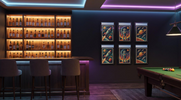
Comic Book Display Cases for Your Home Bar and Game Room: 5 Picks for 2027
A good home bar tells guests something about the person pouring. The bottles on the back bar, the glassware, the neon sign, and increasingly the art on the wall. For a lot of hosts that art is a run of framed comics: a graded key above the bottle shelf, a row of covers over the pool table, a color-matched strip along the game room wall. Bars are hard places for paper, though. Sinks and ice wells add humidity, fridges and kegerators push out warm air, and bar lighting is on for hours. We compared five comic book display cases that suit a bar or game room wall, from graded-slab frames to budget raw-comic capsules, and checked each maker's own specs and prices. Prices and stock are as of the dates shown, so confirm before you order.

Need a comic book display case for the bar wall fast? Start with this snapshot, then read the notes on each pick below.
Prices were checked September 7, 2026; the Vaulted, ComicCapsule, and BCW prices were re-checked October 4, 2026, and Vaulted's single-frame prices again on November 12, 2026. Five-frame costs use the maker's five-pack or buy-five price where one is offered, otherwise five single units, and exclude tax and shipping. Stock and discounts change quickly. Confirm before ordering.
|
Rank |
Product |
Best for |
Format |
UV claim, per the maker |
Start price |
Five-frame wall |
Biggest watch-out |
|
1 |
Vaulted Comic Display Plus |
A sleek graded-comic wall behind the bar |
Graded (CGC) |
UV protection listed, no percentage published |
$74.99 |
$324.99 (5-pack) |
Listed for CGC slabs only |
|
2 |
Crafti FLEX-Display |
Maximum stated protection |
Graded (multi-slab) |
99 percent, printed spec with Tru Vue acrylic |
$50.00 |
$250.00 |
Gallery look costs more per slot |
|
3 |
ComicCapsule |
Color-matched raw comics in a game room |
Raw (Modern/Silver) |
Maker's own internal test, not an independent lab |
$11.00 |
$55.00 |
Tight fit with thick bag-and-board combos |
|
4 |
Encasedables |
Budget slab grid |
Graded (CGC/CBCS/PGX) |
98 percent, manufacturer figure |
~$27.00 (in 5-pack) |
$135.00 |
Only one public review so far |
|
5 |
BCW Current UV Showcase |
Starter wall on a budget |
Raw (Current/Silver) |
97 percent, manufacturer figure |
$16.99 |
$71.15 |
Polystyrene scratches more easily than acrylic |
Match the grid to your collection and your room, then keep reading for what sets each frame apart.
We judged each comic book display case on preservation first and on how it looks in a bar or game room second. We did not lab-test the frames ourselves; the protection scores rest on what each maker publishes and how clearly it backs that up.
The Library of Congress warns that light damage is cumulative and permanent.
Smithsonian framing guides call for acid-free materials and an air gap between art and glazing.
CGC still tells slab owners to store books in cool, low-light rooms.
Protection and preservation: 25 percent
Bar and game-room style: 25 percent
Install and swap speed: 15 percent
Format coverage: 10 percent
Materials quality: 10 percent
Price and value: 10 percent
Review depth and in-stock status: 5 percent
A UV percentage earned full credit only when the maker named the glazing or showed how the figure was measured; a bare "UV protection" line scored lower, and so did an unstated test. Community ratings were weighted by sample size, so a single five-star note never matched dozens of verified reviews. Frames that sit permanently "sold out" also lost points, because you cannot hang what you cannot buy.
Vaulted's Comic Display Plus looks at home next to a lit back bar. It has a carbon-fiber-finish shell (a satin white version is also listed), high-density EVA foam with what Vaulted calls Friction Fit to hold the slab, a front that keeps the CGC label in view, and a magnetic display window that the maker lists with UV protection, although it publishes no percentage. The Plus was $74.99 for a single frame on November 12, 2026, and $324.99 for a five-pack on October 4, 2026. In-stock items ship within one to two business days.
The magnetic window lifts off for a swap, and the foam cradle holds the slab in place while you change covers. The frame is lightweight, wall-mountable, and needs no assembly. Vaulted lists the Plus at 14.19 by 9.5 inches and 1.28 inches deep, so it sits close to the wall and stays clear of shoulders at a busy bar. One buyer on Vaulted's product page reports hanging a five-pack in about 15 minutes with a level and a drill, and another notes that the window magnets are strong enough that you should lift the cover from both sides.
The Standard Vaulted Comic Display is open front, with no window. It costs less, at $44.99 for a single frame on November 12, 2026, and $174.99 for a five-pack on October 4, 2026, but choose the Plus if the wall gets daylight or long hours of bar lighting, and remember that even the Plus cannot replace a dark, cool room. CGC's own FAQ still tells collectors to avoid heat, humidity, and bright light, so treat any wall frame as a display rotation, not permanent armor.
Biggest watch-out: Vaulted lists compatibility with CGC slabs only, so CBCS and PGX owners should check dimensions before buying. A few reviewers also mention a slightly loose fit at first, so check the slab sits snugly before you hang it over a bar top.
Crafti prints a 99 percent UV-blocking spec for the FLEX-Display and names Tru Vue museum acrylic as the glazing material, according to its product page. No other comic book display case in this roundup is as specific about what sits in front of the book.
Beyond the numbers, FLEX encloses a slab on all four sides and sets it about 1 inch behind the front window, echoing museum spacing for works on paper. That enclosure also keeps out the dust and fine film that build up on anything hung in a bar or a room where people smoke cigars.
Stainless standoffs let the frame switch between a wall mount and a desk stand, handy when you move a grail from the game room to the bar top for a party. An optional NFC "Curator" tag links the frame to creator videos or provenance documents, a conversation piece when guests ask about the book.
Price at publication: $50 per frame, about $250 for a five-frame wall (September 7, 2026).
The gallery-style acrylic reads more "art wall" than the carbon-fiber look of Vaulted.
Stock was active with 147 verified brand-site reviews, averaging 4.9/5 at last check.
If stated protection is your top priority, FLEX is the leader here; just budget for its museum pedigree.
ComicCapsule turns an entry-level comic book display case into a color tool. A modern-size shell starts at $11.00, and the Silver Age size at $11.99, as of October 4, 2026. It loads quickly: open the hinge, slide in a bagged Modern or bare Silver Age issue, click it shut, and hang it.
Beyond black, you get bright red, Sega blue, Xbox green, purple, and even glow-in-the-dark editions. In a game room that means you can match console logos or run a color stripe above the pinball machines; at a bar, a single color can pick up the neon or the stool upholstery.
The maker publishes its own internal UV test showing 100 percent UV block on the front and 98 percent on the rear at 395 nm. That is a useful signal, but it is not an independent lab report, so keep these out of direct sun. Construction pairs a polycarbonate front with a polypropylene rear, both non-PVC and acid-free at this price.
Fit caveat: thick Mylar plus full-back boards can jam in Silver Age shells; Reddit users report that a thinner board or the next size up fixes the squeeze. Measure first, or display the book bare for a clean close.
Five ComicCapsules cost less than one premium slab frame, yet give you a bright wall and quick swaps. Just remember the tight Silver Age margin and the self-tested UV data before trusting a grail to long hours of light.
Encasedables cuts the cost of a graded-slab comic book display case to about $27.00 when bought in a five-pack (price checked September 7, 2026). Five frames land near $135.00, less than a good set of bar stools, yet each unit is a fully enclosed acrylic shell with a magnetic closure.
The maker lists CGC, CBCS, PGX, and even PSA trading-card slabs as compatible, and rear magnets keep the frame flush so rows line up by eye. That flexibility helps when bargain hunting leaves you with several slab brands to hang along one wall.
The maker lists 98 percent UV-blocking acrylic on the product page, but shows no independent lab report. Social proof is thin, with only a single five-star review, and stock flips between "in stock" and "sold out," so refresh the cart before planning the wall.
If the button says "add to cart," Encasedables is the lowest-cost path to a clean, aligned slab grid. Just accept that you are buying on spec, not on a pile of verified reviews or third-party UV data.
BCW's Current UV Showcase is the mass-market comic book display case you see in hobby shops: $16.99 each on October 4, 2026, or $14.23 each when you buy five ($71.15 for a five-frame wall), with two-day shipping from several retailers. You can frame ten raw issues for roughly the cost of one premium slab frame.
The product page lists 97 percent UV-blocking polystyrene behind a black backer. Snap a bagged current-size book into the two-piece shell and it keeps out dust and most stray light, but do not expect museum-grade clarity.
Polystyrene is stiff and fairly brittle rather than flexible, so a thick Mylar-plus-full-back bundle can wedge too hard and stress the shell. Silver Age collectors should pick BCW's larger version. Measure first, buy once.
Polystyrene shows scratches quickly, which matters on a bar wall that gets wiped down. Use a microfiber cloth and a plastic-safe polish, and skip ammonia glass cleaners, which haze the surface.
When you need a whole wall today, BCW delivers the lowest per-comic cost. You trade long-term clarity and quick-swap convenience for price, but no other case stretches a display budget farther.
Some setups have needs that our top five do not cover. These products fill those gaps, but each comes with trade-offs.
Ultra PRO UV One-Touch: magnetic raw-comic holder in non-PVC clear plastic that lists UV protection, but the manufacturer page showed "Unavailable" on September 7, 2026. Resellers priced single cases around $28; set an alert if you want a quick-swap case for foil variants.
Perfect Cases single graded-comic frame: walnut-tone moulding, double mat, optional 99 percent museum glass. At roughly $72.85 before the glass upgrade (price checked September 7, 2026), it is the hardwood choice for a lounge-style bar or a whiskey corner, but swaps need a screwdriver.
Display-only helpers
CollectorMount plastic arms (about $6) float slabs or bagged books but add no UV or dust barrier.
IKEA MOSSLANDA picture ledge ($19.99) lets you rotate many books without new holes, and sits neatly above a back-bar shelf.
Raw comics sit in flexible bags that vary in thickness, while graded slabs are rigid holders with factory dimensions. Measure your bag-and-board bundle, not the bare comic, then compare it with a frame's internal cavity. A tight squeeze can crease corners every time you rotate books.
Slabs are simpler: they fit or they do not. A modern CGC comic slab is about 9/16 inch (14.3 mm) thick. Dimensions vary slightly between grading companies, and frames like the Vaulted Plus use high-density EVA foam to grip a CGC slab. Always check the spec sheet before you click "buy."
Preservation differs, too. Raw paper sits close to the glazing, so acid-free materials and an air gap matter; slabs add a plastic shell but still need cool, low-light storage. CGC repeats that warning in its FAQ. Match the case to the format and you avoid the classic display regret: the frame that arrives one size off.
A home bar is not a gallery, and a few of its habits are hard on comics. Plan around them before you pick a spot.
Humidity. Bar sinks, ice wells, glass washers, and a blender running on a Saturday all add moisture to the air right where people tend to hang art. Paper likes steady conditions, so keep frames off the wall directly above the sink and the ice well, and favor fully enclosed cases there.
Heat. Kegerators, wine fridges, and under-counter coolers push warm air out of their vents, and that air rises up the wall behind them. Leave a clear gap above any appliance vent, and never hang a frame where warm air flows straight across it.
Light. Bar lighting stays on for hours. LED strips give off very little UV but still deliver visible light, which fades ink over time. Older fluorescent tubes and some neon signs emit a little UV as well. Put your most valuable books on the wall that gets the least direct light, and put the reader copies under the neon.
Splashes and bumps. Anything hung low over the bar top can take a splash from a shaker or a bump from an elbow. Hang frames above head height for seated guests, and use cases with a closed front anywhere drinks are made.
The same rule that keeps bourbon on a shady shelf applies here. Just as you would keep a good bottle out of direct sunlight, keep a framed key off a wall that catches the afternoon sun.
Every comic book display case claims to block ultraviolet light, but those claims range from a vague "UV resistant" label to a precise "blocks 99 percent of UV between 300 and 380 nm."
What UV really means
UVA (315 to 400 nm) slips through ordinary window glass and causes most comic-fading damage.
UVB (280 to 315 nm) and UVC (100 to 280 nm) are largely stopped by glass or the atmosphere.
A trustworthy spec names both the percentage and the wavelength band, and ideally the glazing or the test behind it. Anything vaguer is marketing.
Museums keep it stricter. The Library of Congress advises filtering out as much UV as possible and still limiting total light exposure. The Smithsonian adds that even with UV-filtered glazing, paper should not sit in direct light for long periods.
Bottom line
Look for a stated wavelength range, not just a round percentage.
Treat "UV acrylic" without numbers as baseline protection.
Even perfect UV glazing will not stop visible-light fading; keep displays out of sunlight, dim the bar LEDs when the room is empty, and rotate books regularly.
Two comic book display case panes can look identical until you tap them.
Acrylic rules the mid-to-high end. It weighs roughly half what glass does and resists casual bumps; museum-grade brands such as Tru Vue's acrylics are sold with UV filtering of up to 99 percent. Downside: it scratches, so clean it with microfiber only.
Polycarbonate trades a touch of clarity for impact strength; it can yellow over years without UV stabilizers. ComicCapsule uses a polycarbonate face to keep costs between $11 and $12, and it is a sensible pick for a game room where a stray pool cue or a foam dart might hit the wall.
Polystyrene (BCW's choice) is the budget pick. It is light and cheap, but it scratches easily and can crack under pressure; think blister-pack plastic more than gallery glazing. Good for reader copies, not six-figure keys.
Glass is the traditionalist's option. Perfect Cases offers an upgrade to Tru Vue Museum Glass that blocks 99 percent of UV, adds an anti-glare coating, and shrugs off scratches. It is heavier, and the shatter risk plus screwdriver swaps make it best for a single grail in a quiet corner, not for a wall above a busy bar top.
Match the pane to the book's replacement cost: acrylic for rotating walls, polycarbonate for colorful game rooms, glass for a lounge-style centerpiece, and polystyrene only when price matters more than permanence.
A comic book display case should let you change covers as easily as you change the cocktail menu, without taking the wall apart.
Magnetic fronts (Vaulted Plus, Ultra PRO One-Touch) open, release, and reseal quickly, which helps when you want a seasonal cover up before guests arrive.
Hinged shells (ComicCapsule) come a close second. The attached lid means you never set a panel down on a wet bar top: flip, load, click, hang.
Screw-back frames (Perfect Cases) look premium but need a table, a screwdriver, and patience. Plan several minutes per swap once you include a dust check.
Mind the depth. Slim cases sit close to the wall, leaving room behind bar-stool backs; deep gallery frames can project a couple of inches or more and catch shoulders when guests lean back. Measure twice, rotate once, and both comics and guests stay safe.
Painter's tape is your friend. Outline each comic book display case on the wall, then view the layout from three spots: standing behind the bar, sitting on a bar stool, and standing at the pool table or the game cabinets. If any taped rectangle hides behind a shelf of bottles, catches glare from a TV or a neon sign, or sits where a cue swings, move it until every spot reads clean.
Leave at least 6 inches of air above back-bar shelving, cabinets, and appliances, both for ventilation and so you can lift frames off without knocking bottles. Mark stud centers, or use anchors rated for the frame plus the book. Lightweight foam-and-plastic displays are easy to hang; glass-front hardwood frames weigh several times more and belong on screws in studs.
Snap a phone photo of the taped layout, peel one outline at a time, and drill with confidence. Ten minutes of prep beats a weekend of patching crooked holes, and your comics stay front and center where everyone at the bar can see them.
Some comics are simply too valuable or fragile for any comic book display case. Museums keep light on sensitive paper to around 50 lux and still rotate it off view after a few months, because light damage cannot be undone.
If your Detective Comics #27 could fund a down payment, keep it boxed. The same goes for brittle Golden Age newsprint, ink that bleeds in high humidity, or covers already showing fade. Hang a high-resolution facsimile instead. It costs little, shows the cover art beautifully, and lets friends take photos at the bar without anyone worrying about a spilled drink.
When you do rotate real books, keep a simple log: install date, removal date, room temperature (aim for 65 to 70 °F), relative humidity (around 45 percent), and any color shift. The Smithsonian still recommends spacing paper away from glazing and treating UV-filtered acrylic as a delay tactic, not immunity.
Remember, a CGC slab is not an invincibility star. CGC's FAQ warns against heat, humidity, vibration, and direct light. Store true keys in a cool, dark archive between short display stints; disciplined cycling beats any high-tech frame, and the bar wall stays fresh for your regulars.
Does a CGC slab already block UV light?
No. A CGC holder seals the comic in rigid plastic, but CGC still tells collectors to avoid heat, humidity, vibration, and light. The slab slows wear; it does not make a comic book display case optional.
Will bar LEDs fade my comics?
Yes, just more slowly than hot halogens. The Library of Congress calls light damage cumulative and irreversible. Use warm-dimmed or diffused LEDs, put the bar lighting on a timer, and rotate covers.
Is 99 percent UV acrylic safe in a sunny window?
No. Blocking UV does not stop visible-light fading, and the heat from a sunny window can warp slabs. Treat the spec as one layer of defense, not a sun umbrella.
What materials should touch a raw comic in a frame?
Only acid-free, lignin-free boards, and plastics free of PVC. Smithsonian conservators recommend inert mounts plus UV-filtered glazing that never touches the paper.
How often should I rotate displayed books?
Museums cap most paper exhibits at a few months under about 50 lux. Follow that rhythm: log install dates, and pull books before you notice color shift.
Can adhesive strips hold a graded comic frame?
Only if the strip's weight rating comfortably exceeds the frame plus the slab, and only on a smooth, dry wall. Near a bar sink or a fridge vent, where moisture and heat weaken adhesive, use screws instead. Heavy glass frames always need screws in studs.
What is the cheapest way to show a full comic run in a game room?
BCW Current UV Showcases on an IKEA MOSSLANDA ledge cost about $17 per slot (price checked October 4, 2026). They trade top-tier UV protection for speed and price, which is fine for reader copies, not six-figure keys.
Should extremely valuable comics ever leave dark storage?
If the book could pay tuition, scan the cover and hang the print. Guests at the bar still enjoy the art, and the real treasure rests in a climate-controlled box.

